BeatSEOAutomation
Daily SEO articles researched and written for a business. The client approves each one, and the service publishes it.
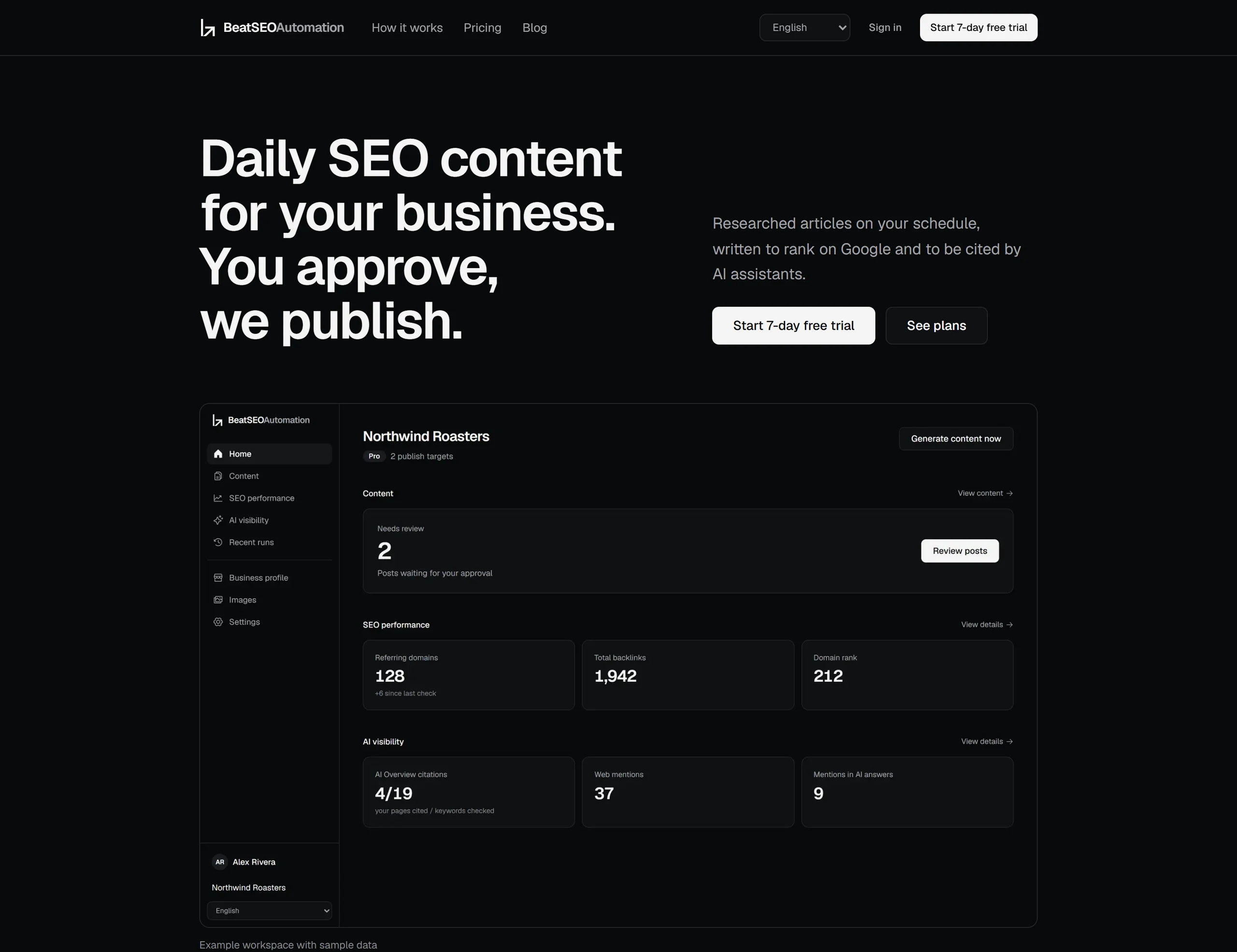
Overview
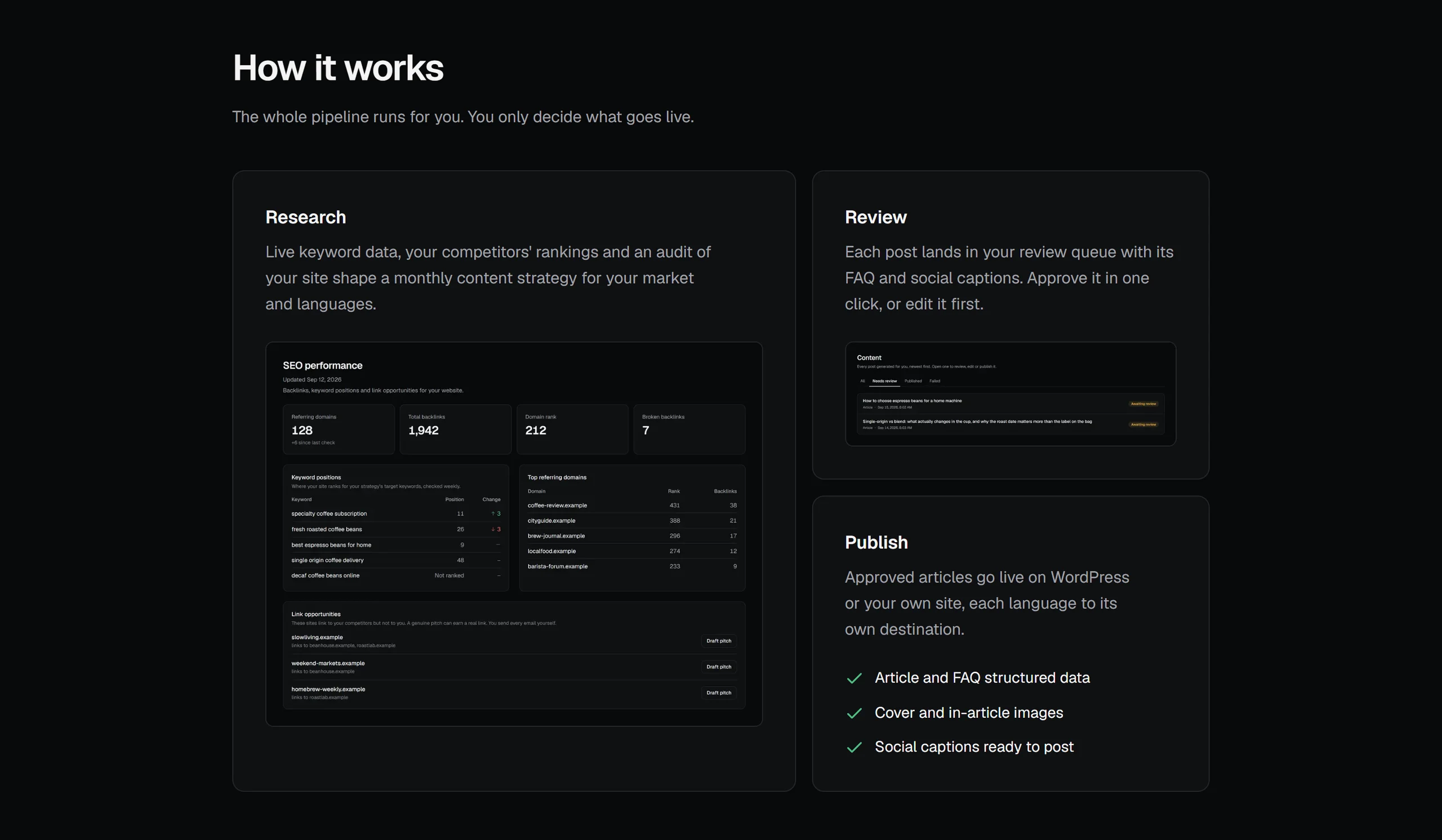
BeatSEOAutomation writes SEO articles for a business every day. It researches keywords, competitors and the client’s own site, drafts the posts, and then waits: the client approves each post, or edits it first, and the service publishes it to WordPress or the client’s own site. The articles are written to rank on Google and to be cited by AI assistants.
My role
I co-founded BeatSEOAutomation and lead the product. I designed the website and the workspace, planned the product’s structure and its data, and worked directly with the developer on how the pipeline, the review queue and publishing behave.
The problem
Small businesses know they need regular content to be found, on Google and now in AI answers, but they rarely have time to research, write and publish it. They also don’t want to hand over their website blindly. The product had to do the work and leave the business one decision: what goes live.
Design approach
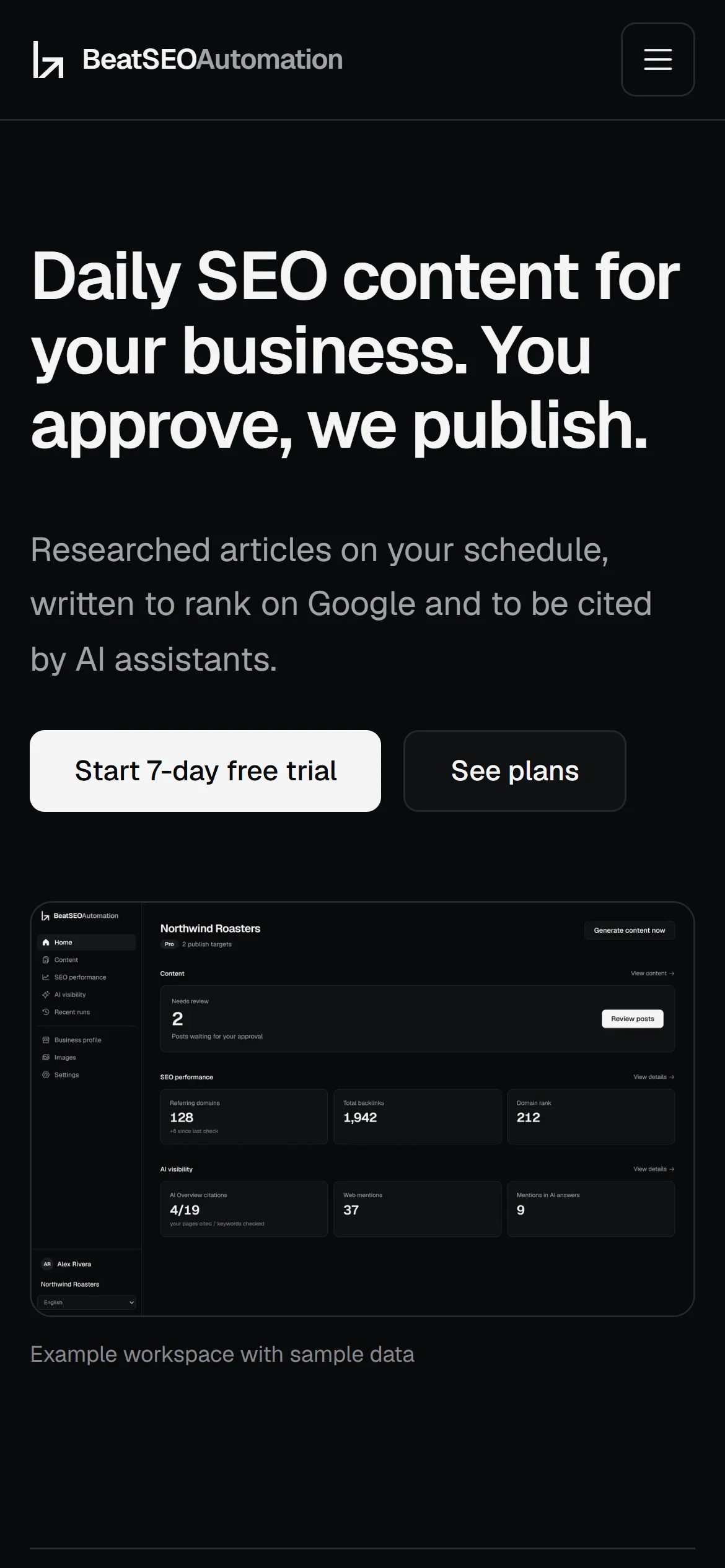
- One promise, said once. “You approve, we publish” is the whole model, so the site and the workspace are built around the single action left to the client: review.
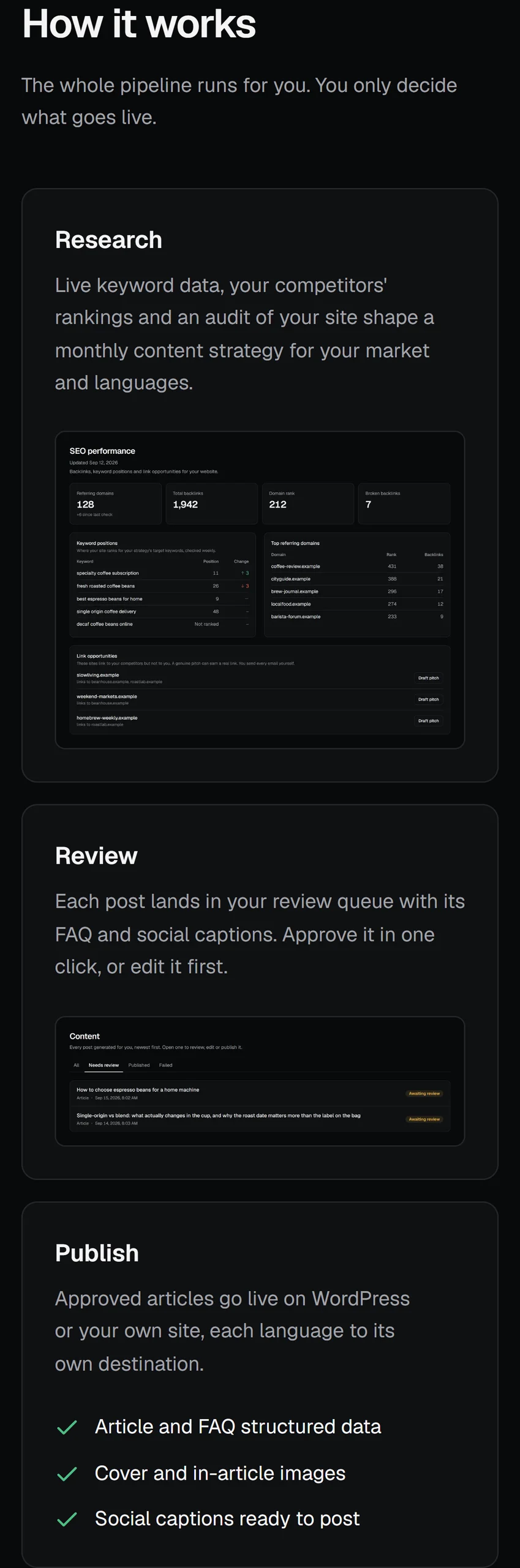
- Show the product, not illustrations. Every claim on the website is backed by a real workspace screen, labelled as sample data.
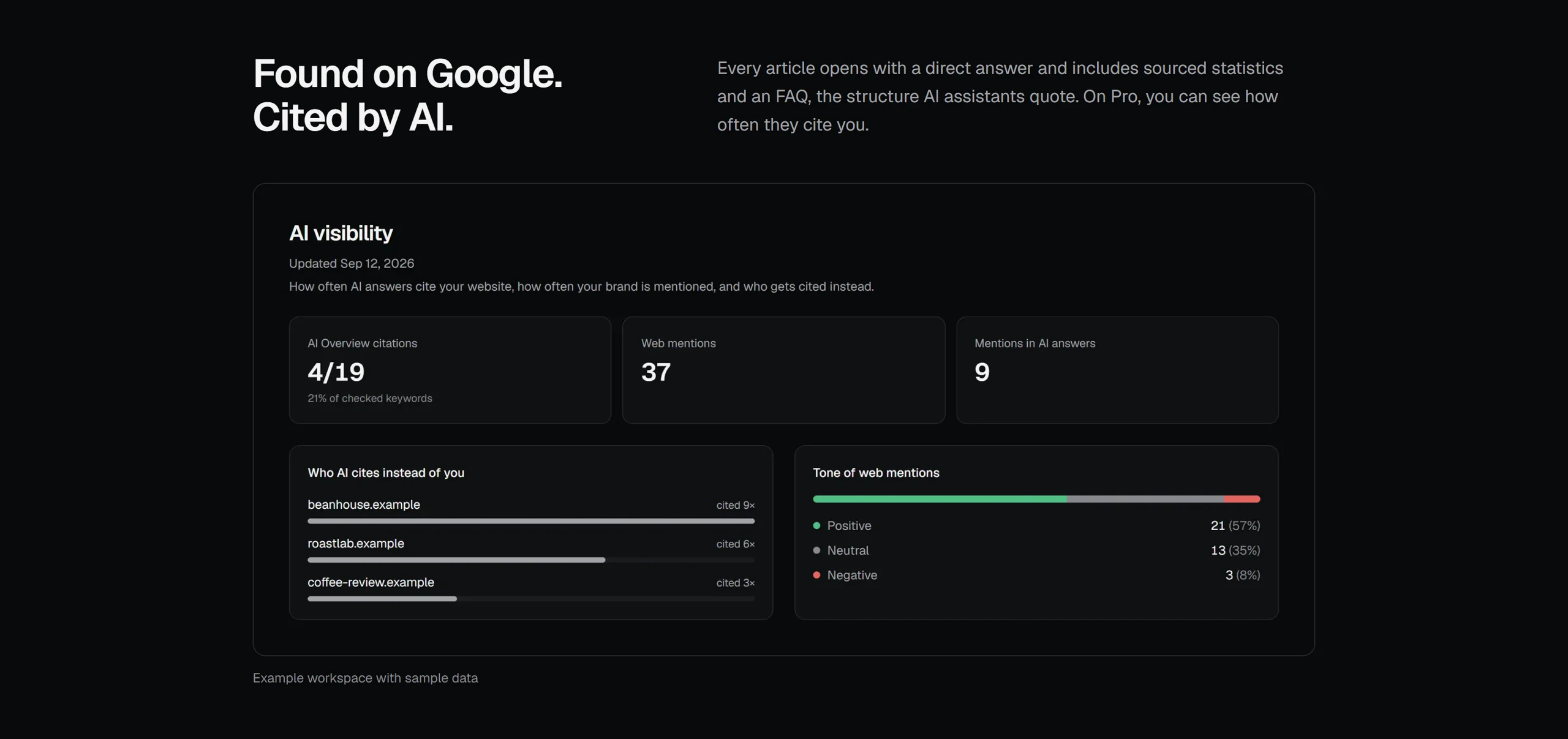
- An entry point that gives value first. The AI visibility check lets a visitor paste their website and see which businesses Google’s AI already recommends, before signing up.
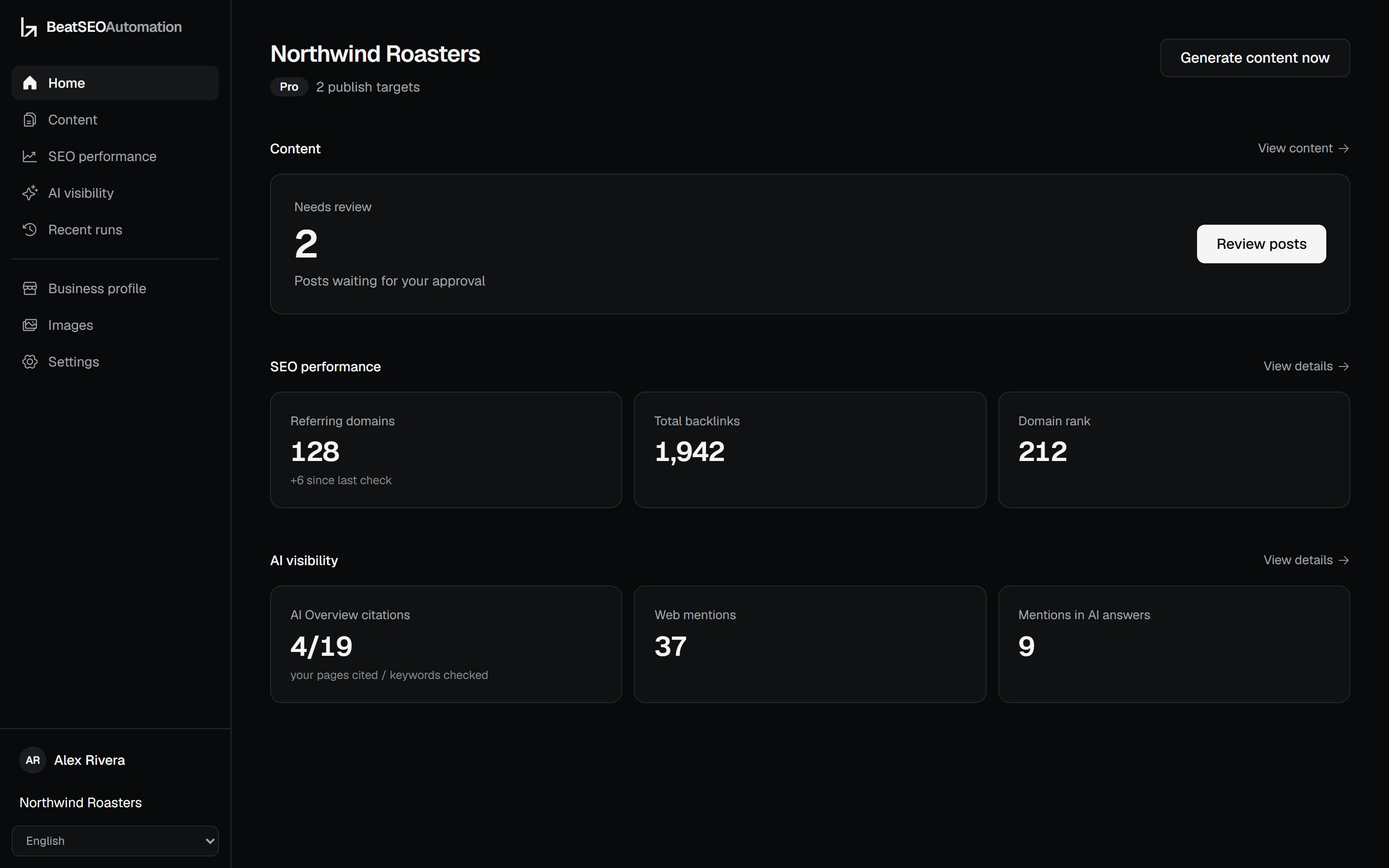
- The workspace opens on what needs attention. The home screen leads with posts waiting for approval, then SEO performance and AI visibility.
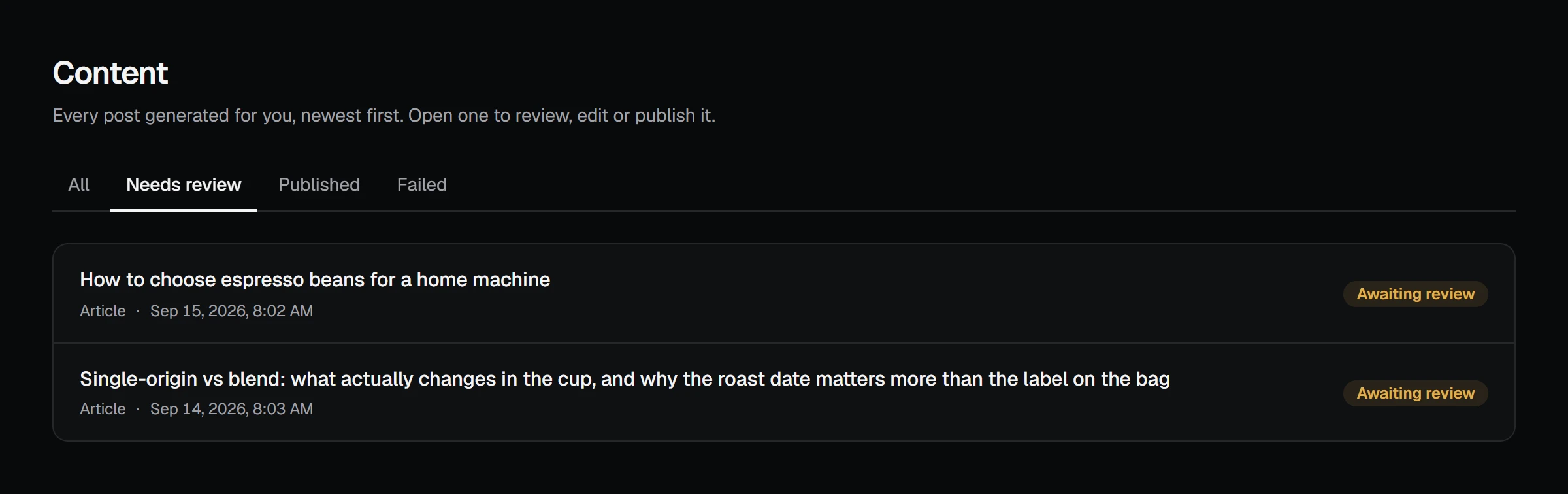
- Statuses you can scan. Content is filtered by needs review, published and failed, so nothing goes live unnoticed.
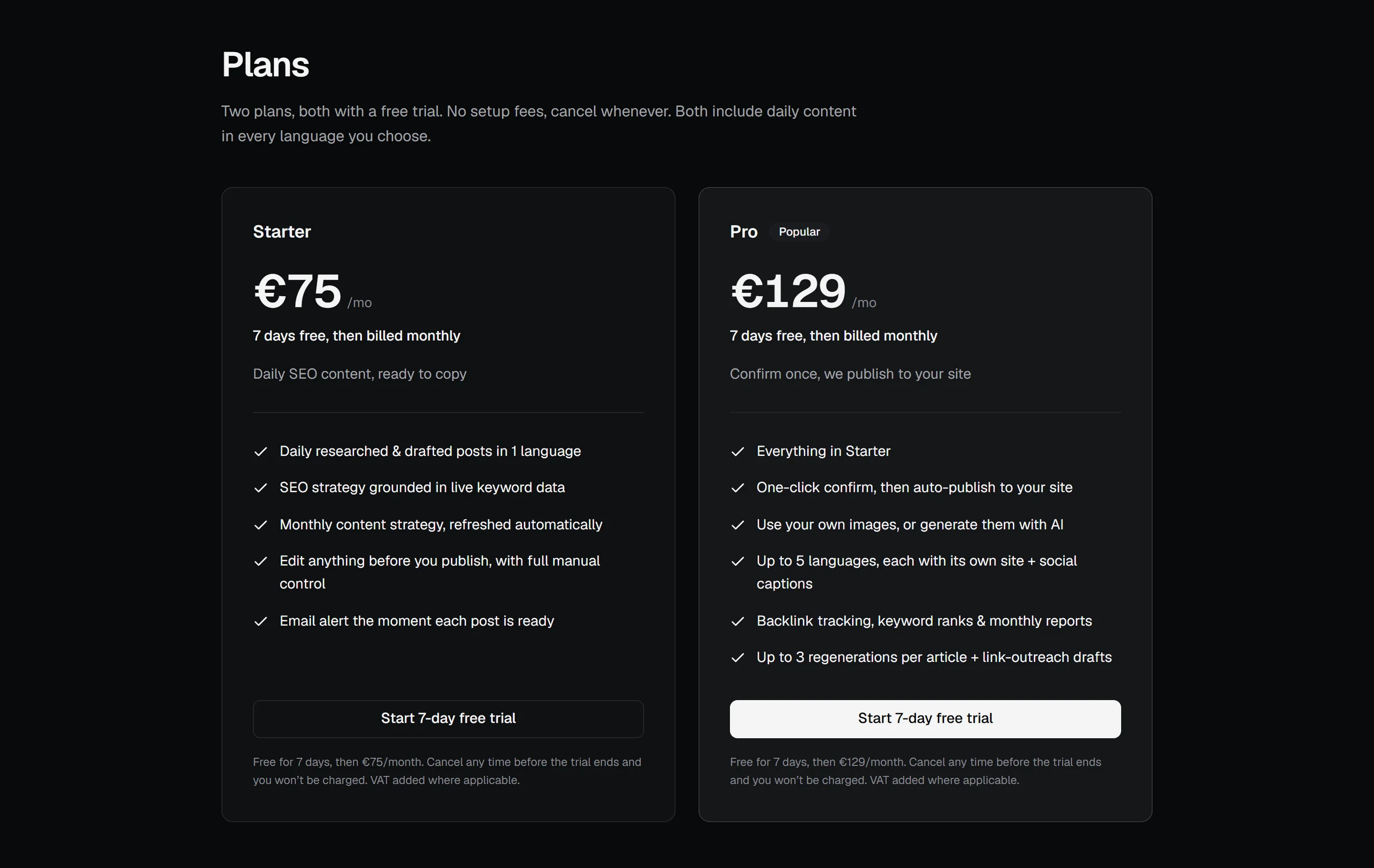
- Plans compared side by side. Starter for copy-ready drafts in one language; Pro for auto-publishing in up to five languages, with backlink tracking and reports.
Product structure
How the product is organised, as it appears in the shipped interface.
Website
- Home
- AI visibility check
- How it works
- Plans
- Blog
- Nine languages
Workspace home
what needs attention
- Posts to review
- SEO performance
- AI visibility
Content
- All
- Needs review
- Published
- Failed
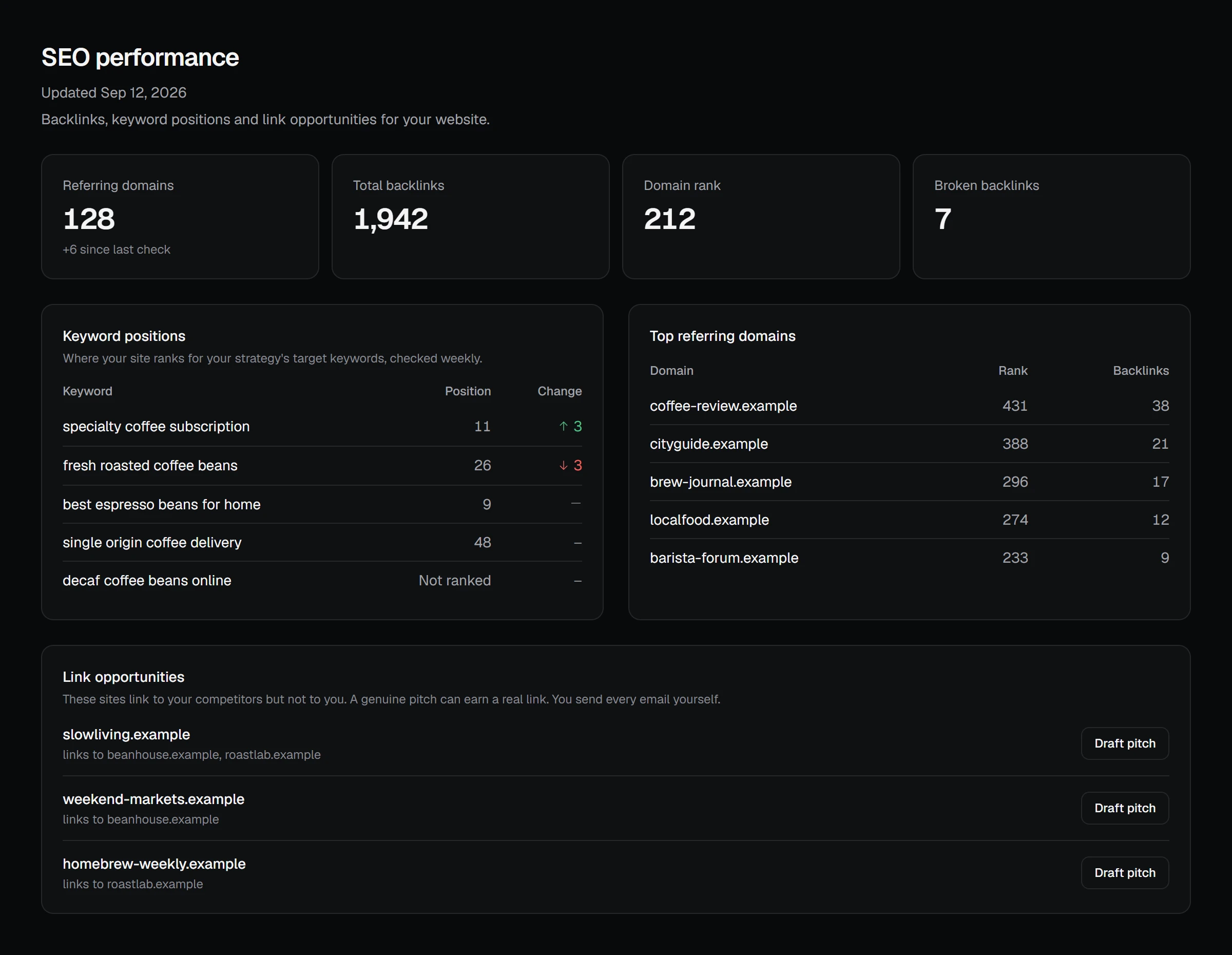
SEO performance
- Backlinks and domains
- Keyword positions
- Link opportunities
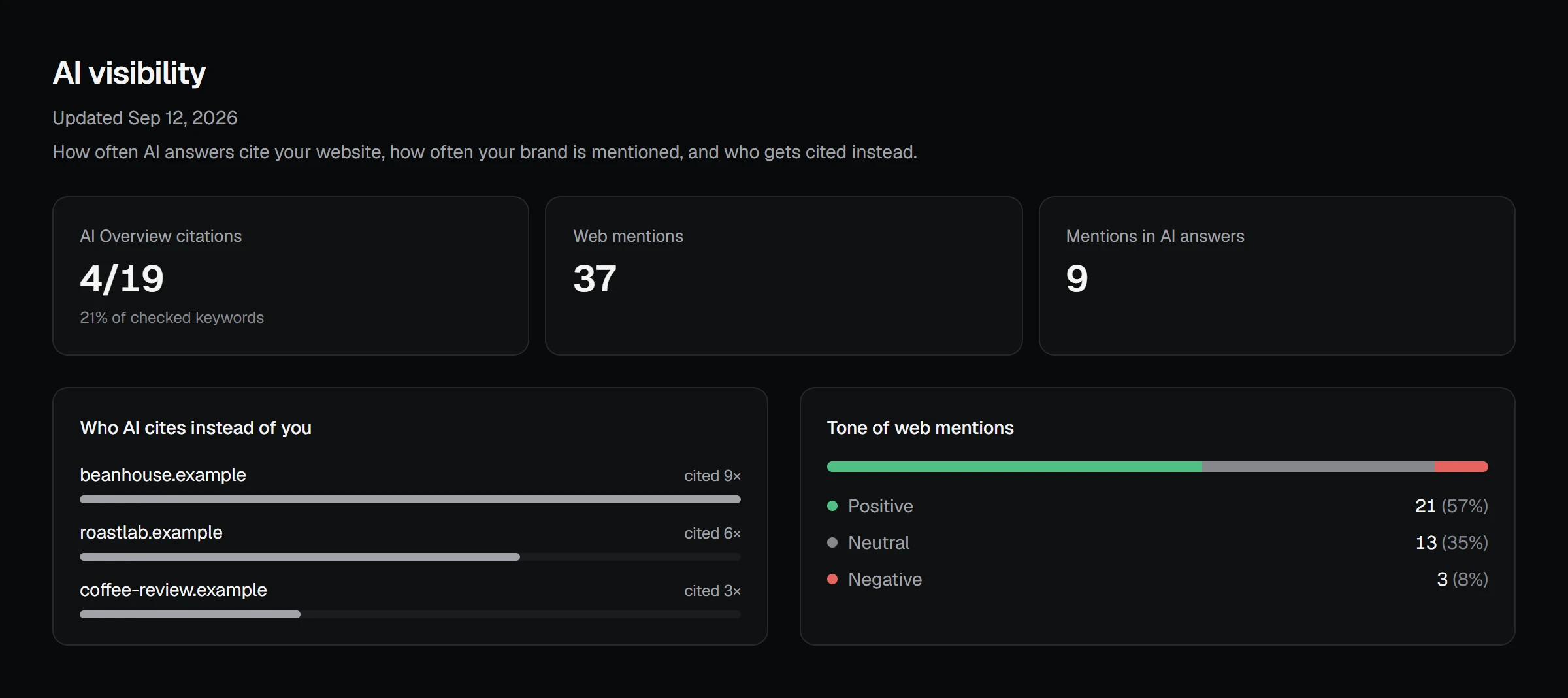
AI visibility
- AI Overview citations
- Web mentions
- Mentions in AI answers
Setup
- Business profile
- Images
- Publish targets
- Languages
- Settings
Data structure
The main entities and their fields, read from what each screen shows.
Business
- name
- website
- plan
- languages
- publish targets
Post
- title
- language
- status (needs review, published, failed)
- FAQ
- structured data
- images
- social captions
Keyword
- keyword
- position
- change since last check
Referring domain
- domain
- rank
- backlinks
Link opportunity
- site
- links to competitors
- outreach draft
Run
- date
- steps
- result
Working with the developer
I worked with the developer on the whole product: which data each screen shows and where it comes from, how a post moves from research to review to published, what happens when publishing fails, and how languages map to separate publish targets. We agreed design decisions and functionality together and checked the implementation against the designs.
Key responsibilities
- Product design: the product’s structure, functionality and overall experience.
- UX/UI design: the website and the workspace, every screen and interaction.
- Project leadership: leading the project and coordinating tasks with the developer.
- Information architecture: the website’s flow and the workspace’s sections and their relationships.
- Database and data structure: organising businesses, posts, keywords, domains and runs into tables.
- Developer collaboration: discussing design decisions, functionality and implementation directly with the developer.
Website

Workspace